Curated by Art Walk Porty
Fallow Land is an exhibition comprised of five artists, having completed six month residencies that combine interdisciplinary place-centred projects that span across the exploration of post-agricultural lands. From Portobello in Edinburgh, Jedburgh a town in the Scottish Borders, to small holdings around Western Syria. The artists included are Henna Asikainen, Rudy Kanhye & Lauren La Rose, Hanna Paniutsich and James Wayness.
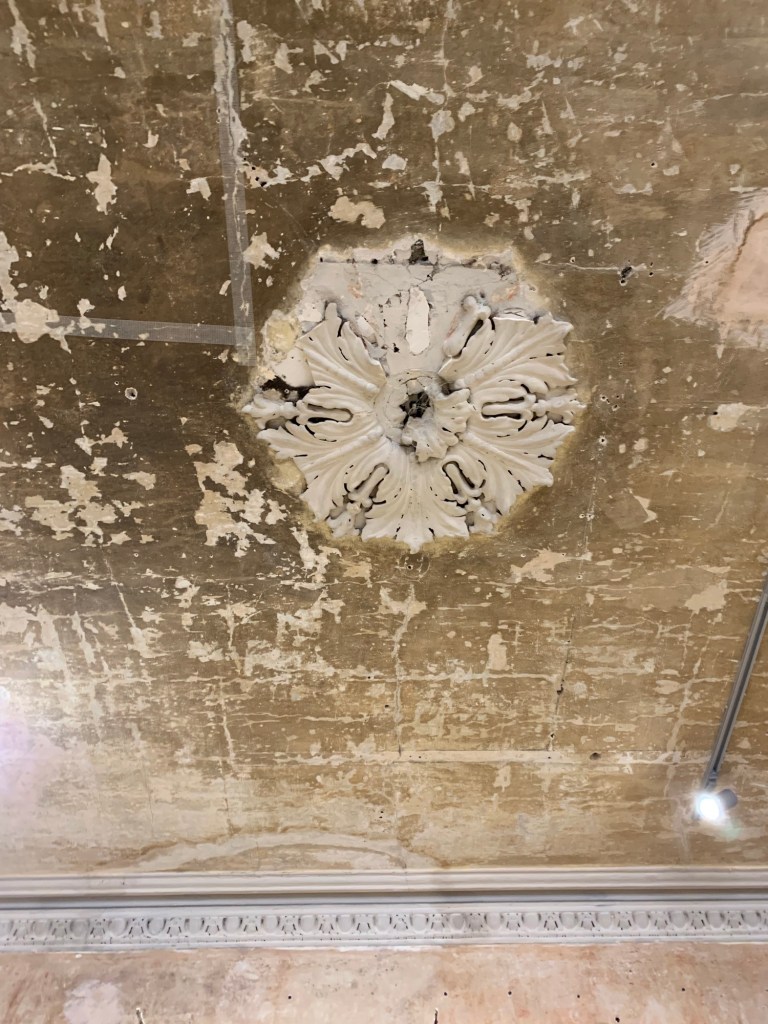
The exhibition, hosted in MOTE102, exposes bare plaster walls with gilded history, centring one word, Fallow. The process of fallow, where soil is left to lie after being tilled to allow for recovery, a period of rest, a period of exposure, I can’t help but feel the stripped surfaces of the space reflect this same sentiment.
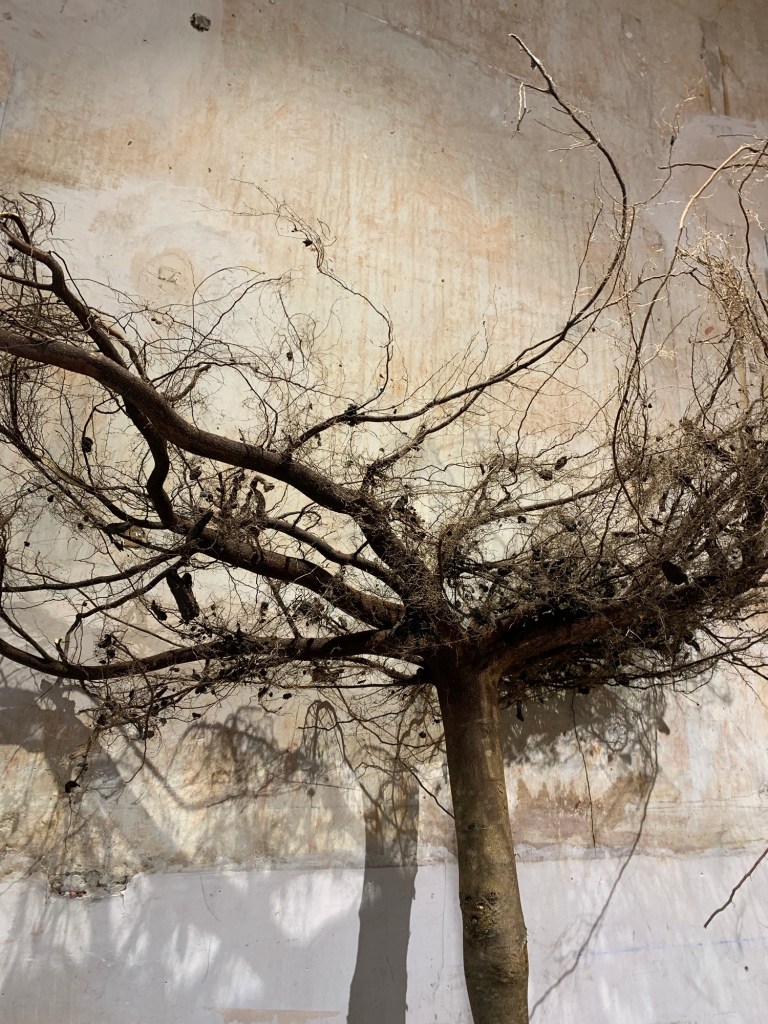
In the far end of the exhibition is an uprooted upside down sycamore with is exposed roots that once gave it life, soil entangled within the system, still shown as ‘resilience and fragility’. Displaced by commercial forestry. This piece by Henna Asikainen, ‘Roots and Soil’ tells us of the connection between the upper tree and the life held by the roots just below the surface, a community, a kinship between root and soil. Uprooted, displaced, exiled.
resting at lands, termoiled bones, written in surfaces.
work at lands, saved,
grasses, brushing against grains.
As I continued around the exhibition, opening the journal that accompanies the exhibition tells me this, ‘land at rest, land at work’. I think as someone who rests with chronic illness, rests with land, walks on land, works my body with land, through illness, under my feet land is working, busy places in which I find my resting place. After walking, after my body asks me, when shall we rest? Soon? Gentleness – gentle – necessary. Compacting the soil underneath my feet, what life lies just beneath the top layers of the soil?
Exploring this link between illness, rest, resistance and land, has served threads to my own life and creating connections between them shows that slow time and gentle generative practice of fallow and disability are kindred and a resistance to productivity as a result of capitalist pressure. Reading the conversation between Art Walk Porty curator Rosy Naylor and researcher Dr Anna-Katharine Laboissiee I begin to learn of the tension between fallowing as a practise of rest, restorativly giving the soil time to regenerate and fallowing as a practice within agriculture which is in existence because of intensive periods of productivity, to the point of exhaustion in which rest is absolutely necessary for the health of the soil. Where fallowing is both a term rest for the soil and its own contradiction, often being used as a term of unproductive or ‘useless’ in which the implication that rest for rejuvenation is both ineffective and unworthy.
‘…landowners, who were able to cast what they perceived as outdated or ineffective farming practises as unproductive or lazy and could ultimately use the characterisation to appropriate the management of fallow land to squeeze more revenue out of it.’ – Dr Anna-Katharine Laboissiee
Following from this resistance, I am struck by the hanging ceramic oyster shells centred in the exhibition. ‘Hoya Ceramics’ by Anna Samson in collaboration with Rudy Kanhye and Lauren La Rose as a part of research ‘Shore Hut’. Exploring further into Fallow land and asking the questions, is a shore a fallow land? And what is a weed? In the exhibition space, porcelain oyster shells hang from bright yellow rope in the centre of the main room, as oysters attach onto the farming ropes on our coastal waters, the fragility of the porcelain a juxtaposition to the firm age rings that gives the oyster that unique and rugged shape.
‘Shore Hut’ explores the place of the shore where margins and borders expand, where diasporic, migratory and disabled bodies can change the process of representation.
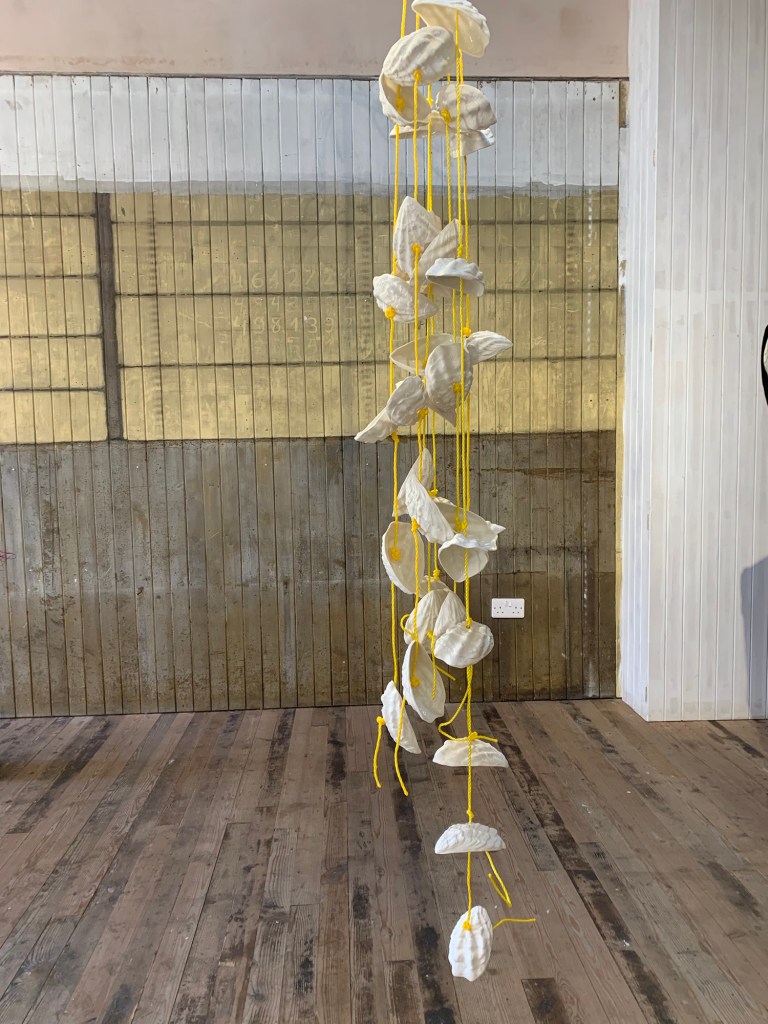
I will be looking forward to the performance as a part of Art Walk Porty 2025, where the community ‘shore’ will be cultivating ‘Native’ oyster leaf plants, with an installation of 50 handmade oyster shells by Anna Samson. Touching on race, disability and decolonisation studies and sit-specific research in Mauritius and Scotland, highlighting the role of women across empires.
There is some much to see in this exhibition, delving further into the journal with Henna Asikainen, ‘Homelands Left Behind’ which explores a group of Syrian women with farming backgrounds who arrived in Scotland as refugees. Work from Hanna Paniutsich, ‘Residue’, exploring the land of Craigentinny. James Wyness, ‘Set Aside’ a short video piece, where Wyness has been using slow time to explore two fallow lands in Jedbourgh.
I highly recommend visit for the last couple of days.
_________________________________
Exhibition Fallow Land, by Art Walk Porty, curated by Rosy Naylor.
Final few days of the exhibition – 16th / 17th May.
To find out more head to https://www.artwalkporty.co.uk/project/fallow-land/
 Gal bag.