The congruence within/from chaos – ‘the repetition of a process or utterance’.
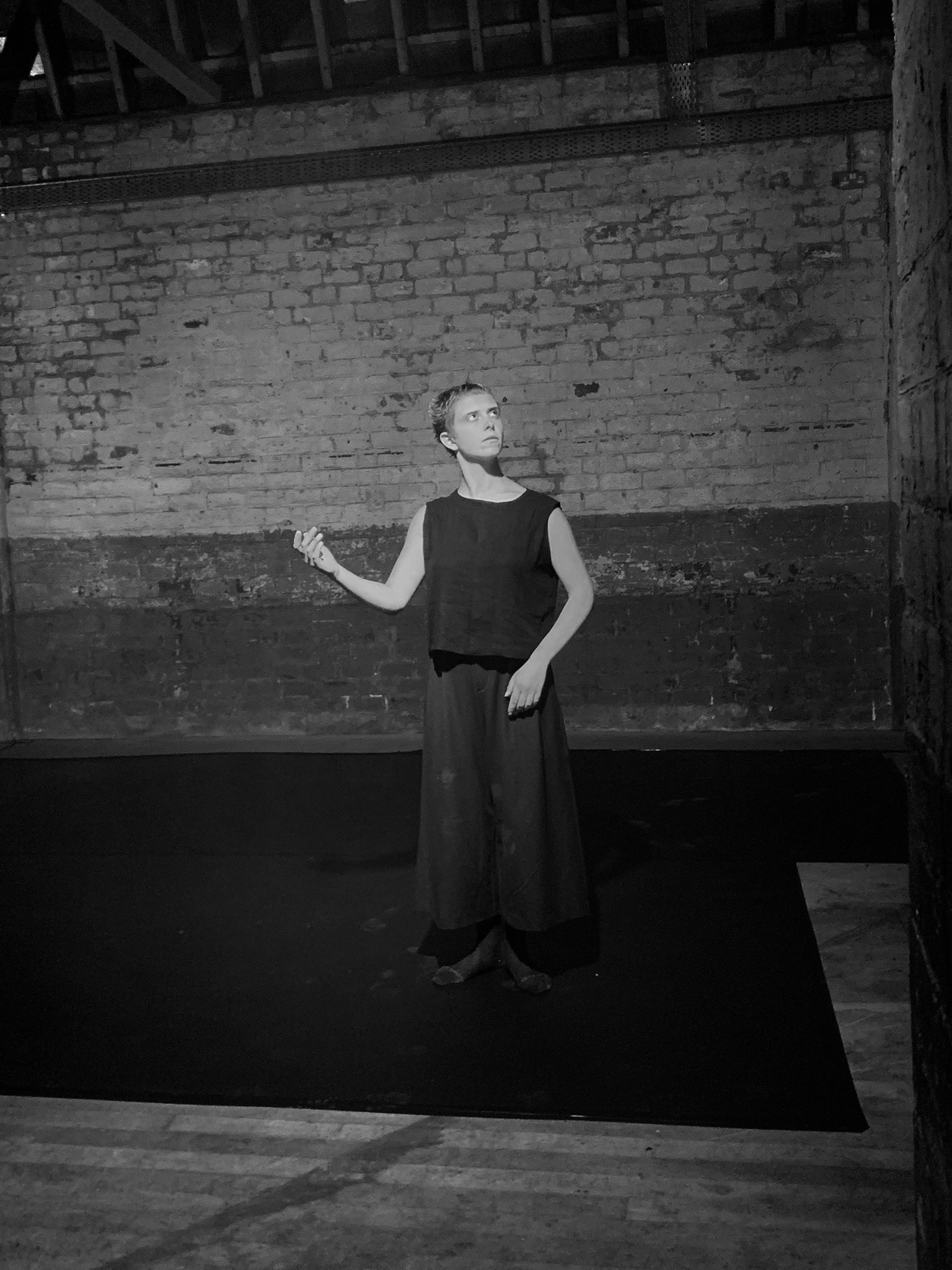
Iterations is a performance piece using contemporary dance produced by experimental multidisciplinary artist and choreographer Ellen Crofton. Having previously shown this work as a solo performance at Strangefield, Glasgow, this is the first time Crofton has developed this piece with two joining dancers, Rasa Kazenaite and Louise Honeybul, at the Dance Base ‘Scratch Night’ event in Edinburgh. Exploring pattern, repetition and the rhythm of chaos; Eliza inhaled Crofton’s practice and exhaled her craft into this retelling.
———–
The stage falls dark and three dancers appear on stage. Aligned with each other, in silence, the dance begins.
A movement of an arm, held in suspension, released with an exhale. A tension is beginning to build, the stillness of sound the dancers expel a single breath. Nerves gently rise. This first section Crofton describes as evoking a tightness that is aimed to build on the focus of repetition – the breath melds into the pattern. The breath is a pause for what is to come.
As the performance progresses, the rising chaos is undoubtedly about to erupt. The atmosphere is pent as the audience indefatigably keeps up with the intensity. The silence dissipates and the sound becomes loud, weighted and distorted, with a shift in energy, provoking sensory stimulation. The audience looks for a break with the hold that has been captured by the dancers, the gaze, the eerie stature and constant arm movement, there is an attempt to lose oneself within. A claustrophobic sensation begins to unfold, and I am forced to sit in the uncomfortable unpredictability of movement. At first the un-synochronisity of the dancers creates a pit in the stomach, the dis-joint of each reaching arm jars the human need to find patterns in the rhythm. The dancers continue to move out of sync from each other as the sound continues to intensify. This more frantic style accentuates the chaos.
The bodies begin to blur, edges soften, wholeness becomes opaque, a transition occurs. Embodiment becomes disembodiment. Shape becomes shapeless.
In the final section the dancers begin to slow and retreat to the back of the stage, continuing to hold a strong stare, unmoving with this eye contact, there is a feeling that everything is falling away, everything slowly coming to an end. A sense of relief overcame me; I am finally released.
—————
In the accompanying text of Iterations, Crofton outlines her exploration of shapelessness and the idea of it as a ‘state of being’ which she has chosen to delineate through contemporary choreography. She writes “Perhaps the rhythms we find allow us to remain rooted in shapelessness.” I was keen to follow up on this term ‘shapelessness’ with the artist, intrigued by curious thoughts: what is shapelessness? what does this look like? what does it feel like?
Crofton explains that this shapelessness is the continuum of repetition and the theory of ‘shapelessness’ is the loss of shape. It uses this performative expression to represent one’s own chaos beginning to take over. The repetitive movement from the dancers increasingly becomes more and more frantic, eventually achieving the transition from being shapeful to shapeless.
Crofton explains the choreography explores this idea of one’s ‘self chaos’. An inspiration for the piece was finding the line within the mess followed by finding a way of harnessing it without suppressing the expression of the self. Crofton goes on to describe a tree in a storm, the tree trunk represents the strength of the central line, whilst the branches are precariously swaying and crashing in the wind, the repetitive movements throughout the storm started to create a concept for the choreography.
Within the sections of the footwork, Crofton has been exploring renaissance and line dancing, which can be seen filtered throughout the middle section. Interested in the patterns and rhythms of what can be very rigid choreography, this particular era of dance produced structured and ordered forms which contrast against the disorder of the crashing branches of the tree. Utilising the research methods developed during her MLitt Fine Art Practice at Glasgow School of Art, Crofton is keen to develop this into a longer piece of work.
After experiencing the dance as an audience member, I found the shapes to be directional, sharp with intention and very much shapeful in my own thoughts of shapelessness.
_____________________________________________
Ellen Crofton is an experimental multidisciplinary artist and dance
choreographer. Ellen works with embodied and experiential research
methodologies and articulates their research through choreography
and alternative processes: interactive or experimental sound (such as
contact mics), experimental film techniques (abstracting digital film
or using alternative processes with 8mm film), and performed or
written text. With a focus on performance during the MLitt Fine Art
Practice course at The Glasgow School of Art (2022-2023) and
through the study of English Literature at undergraduate level (with
a focus on Renaissance Theatre), writing plays, and working with a
theatre company, Ellen’s practice relies on various mediums and
their intersections. Prevalent in all their work is a keen interest in the
transitional state of performance, audiences, and the stage, as well
as liminal, radical or collective spaces.
 Gal bag.