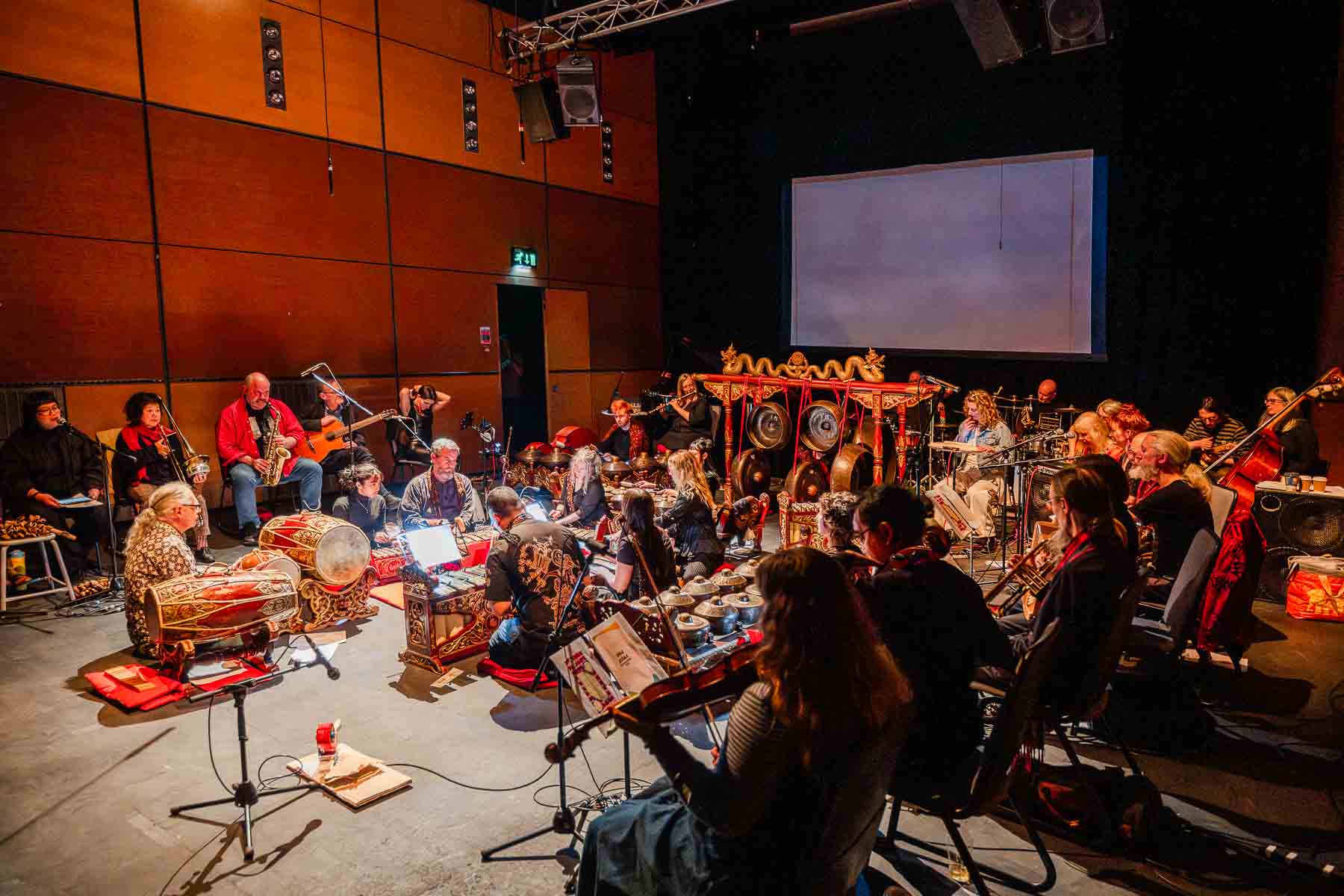
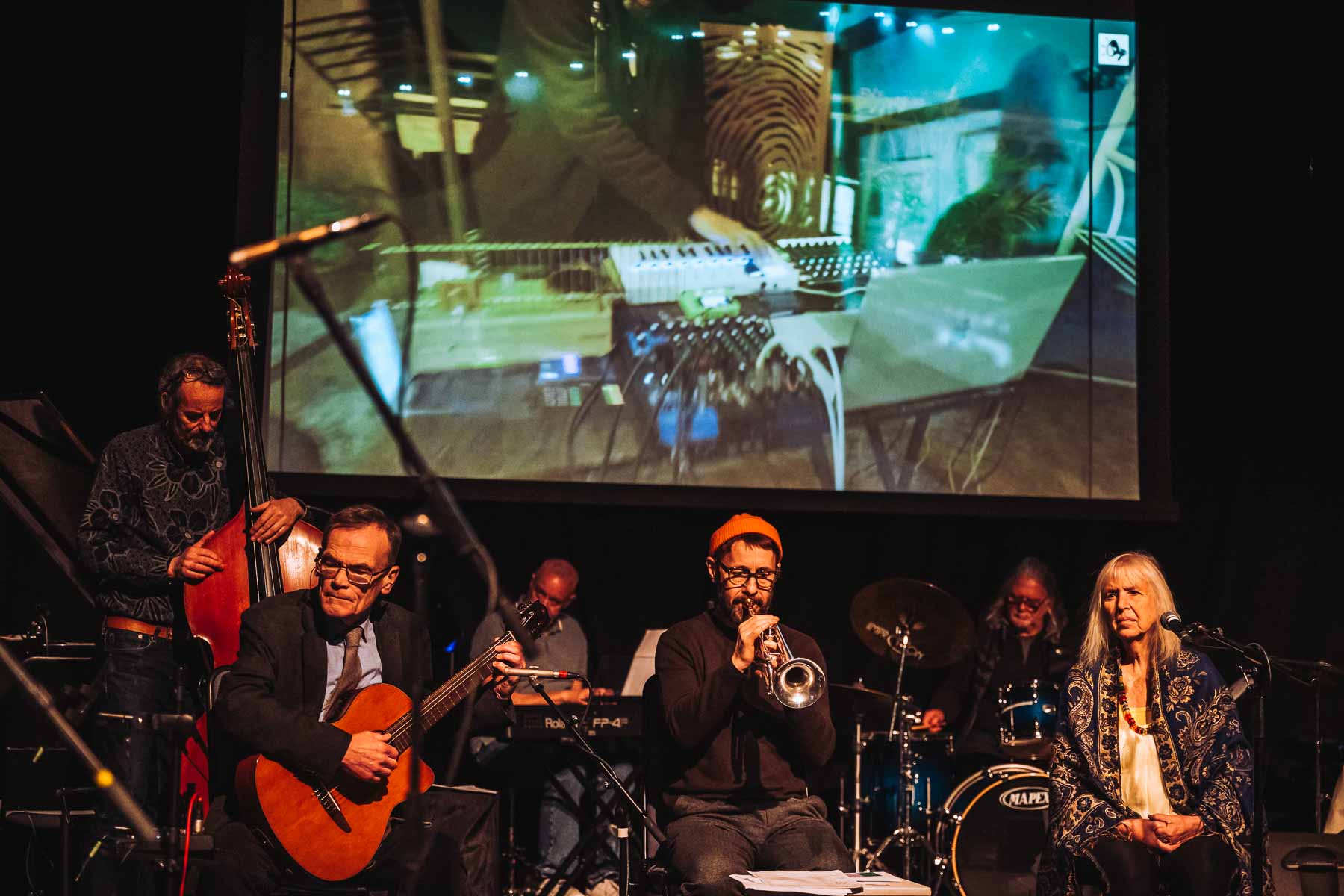
The Glasgow Improvisers Orchestra Festival 2025 held at the Centre for Contemporary Arts Glasgow was a three day music extravaganza with the central focus on artists from Indonesia, Japan, and Sri Lanka, with an additional performance of Gamelan music.
We had the privilege to attend a few of the events during the festival – evening performances on Friday and Saturday as well as a panel discussion. Being in a space with both traditional and non -traditional music I was able to take what I knew and reshape that understanding through the visual and audio aspects of their sound making; learning and unlearning in real-time.
GIO Fest opened the world of orchestral traditional music with a fusion of improvising artistry. Bringing together musicians and composers from all around the world, this festival was a celebration of the contemporary ensemble. This included GIO and a celebration of 2025 guest’s Gamelan Naga Mas and members of the Indonesian collective Perempuan Komponis, Gema Swaratyagita, Dinar Rizkianti, Arum Dayu, and Nadya Hatta.
With special mention to the Gamelan Naga Mas which is a community made ensemble in Glasgow. Performing traditional Indonesian music, but known to devise new pieces based on the instruments and practices of the Gamelan. This year GIO would push the boundaries by exploring improvisation on the traditional percussion.
The Gamelan is a traditional instrument in Indonesia which holds great cultural importance. Gamelan is a traditional Indonesian ensemble music from Bali and Java, primarily featuring percussion instruments like gongs, metallophones, and drums. The Gamelan is about people, community – it brings people together.
This festival is where traditional meets contemporary.
____
_______
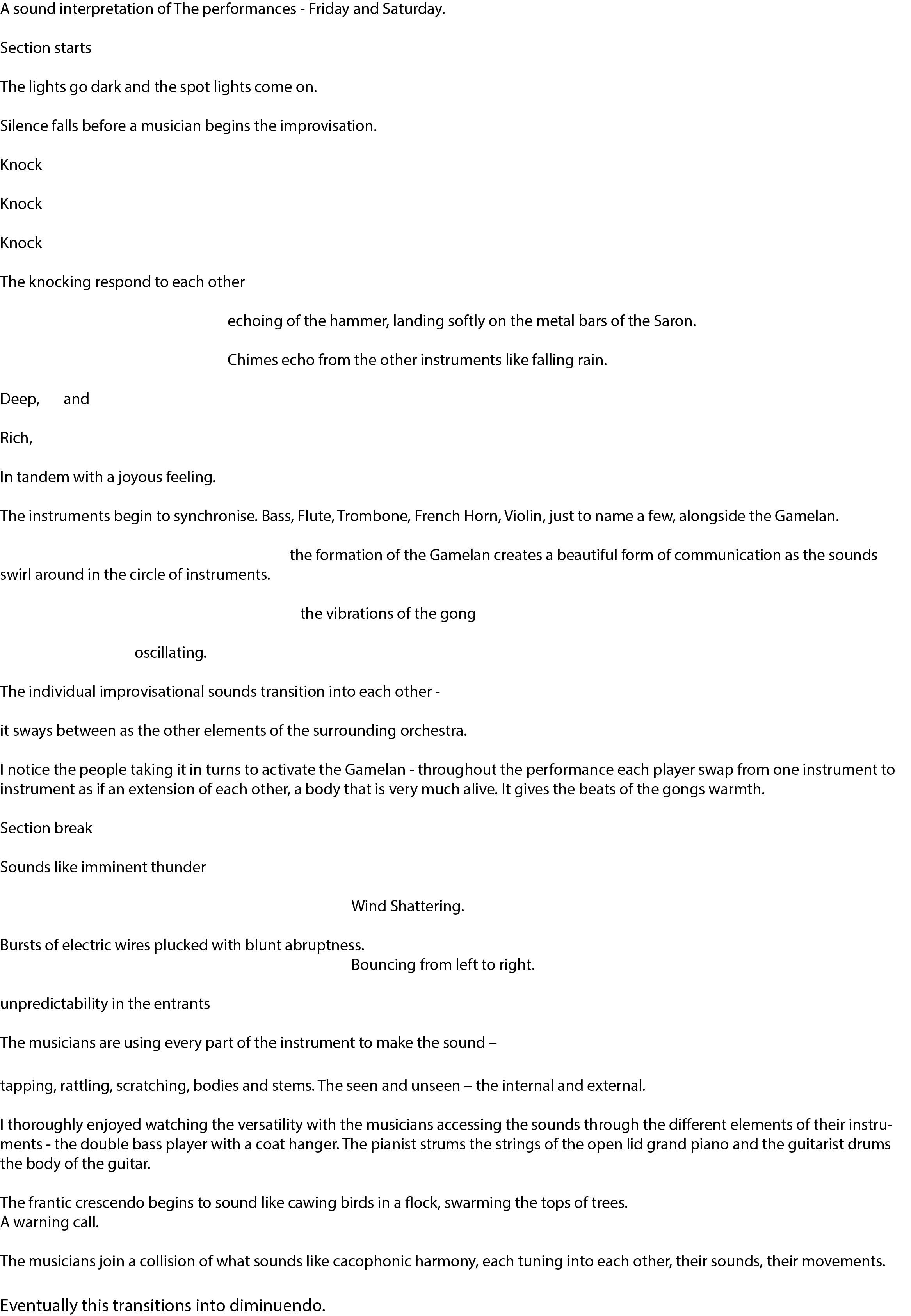
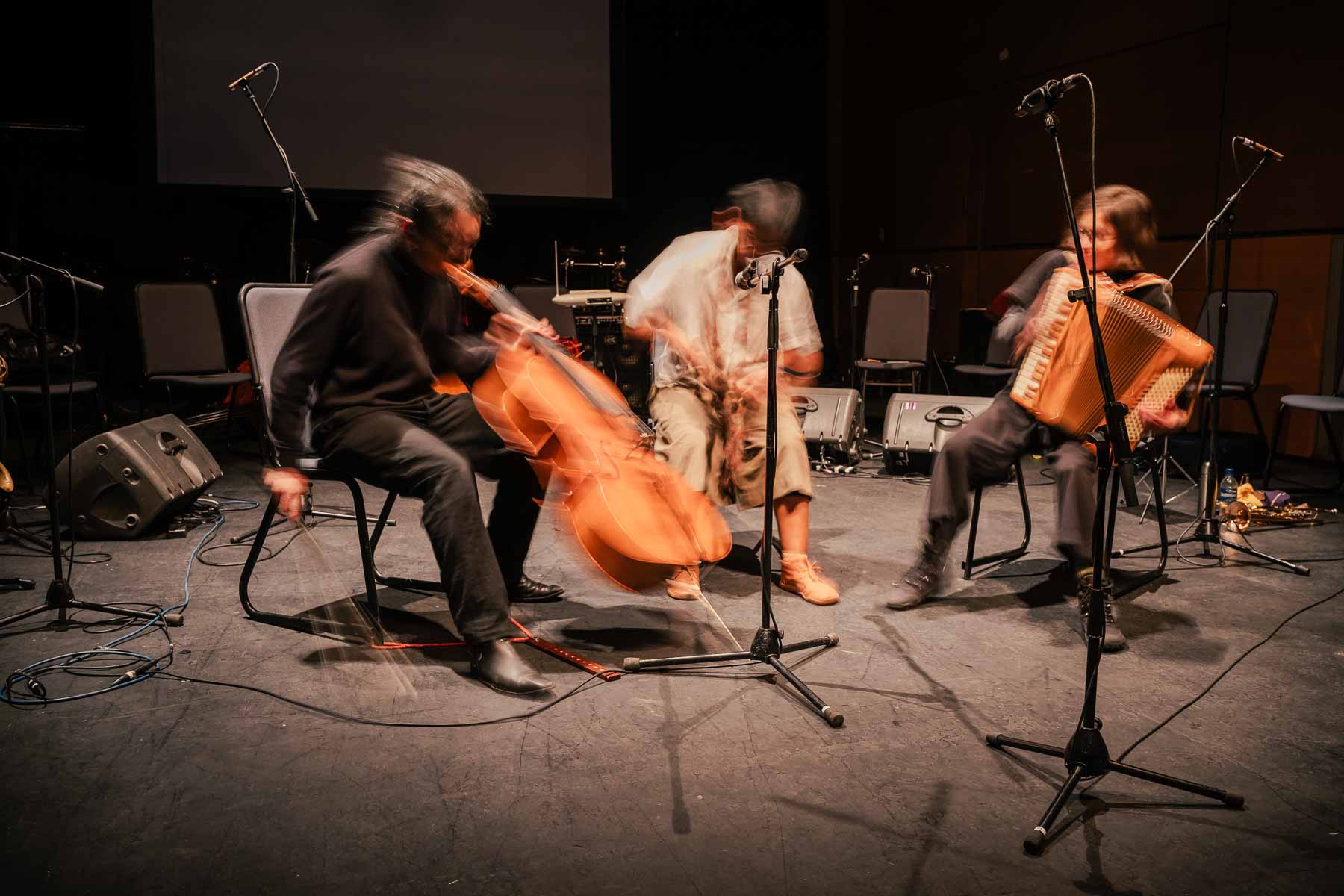
An interesting observation about improvisation that I noticed over the festival was: connecting with how music is played and interpreted. The need to see music outside the constraints of ‘traditional’ music playing allows music to be envisioned as an entirely embodied experience.
A question I have asked myself, with being exposed to the art of improvisation, is how will I know an improvisational performance has been a success? Which then leads me to my next thought that perhaps this is what this festival aims to challenge or is maybe even challenged by. As an audience member I was enamored with the performances and I was intrigued with how the musicians knew when the piece had reached its natural conclusion. Is this through the musicians ability to respond to each other; the feeling of the expression produced as a hive or intuitive psyche-wave.
_______
Who Gets to Be Heard and What Are We Hearing? Rethinking Inclusion in Contemporary Music.
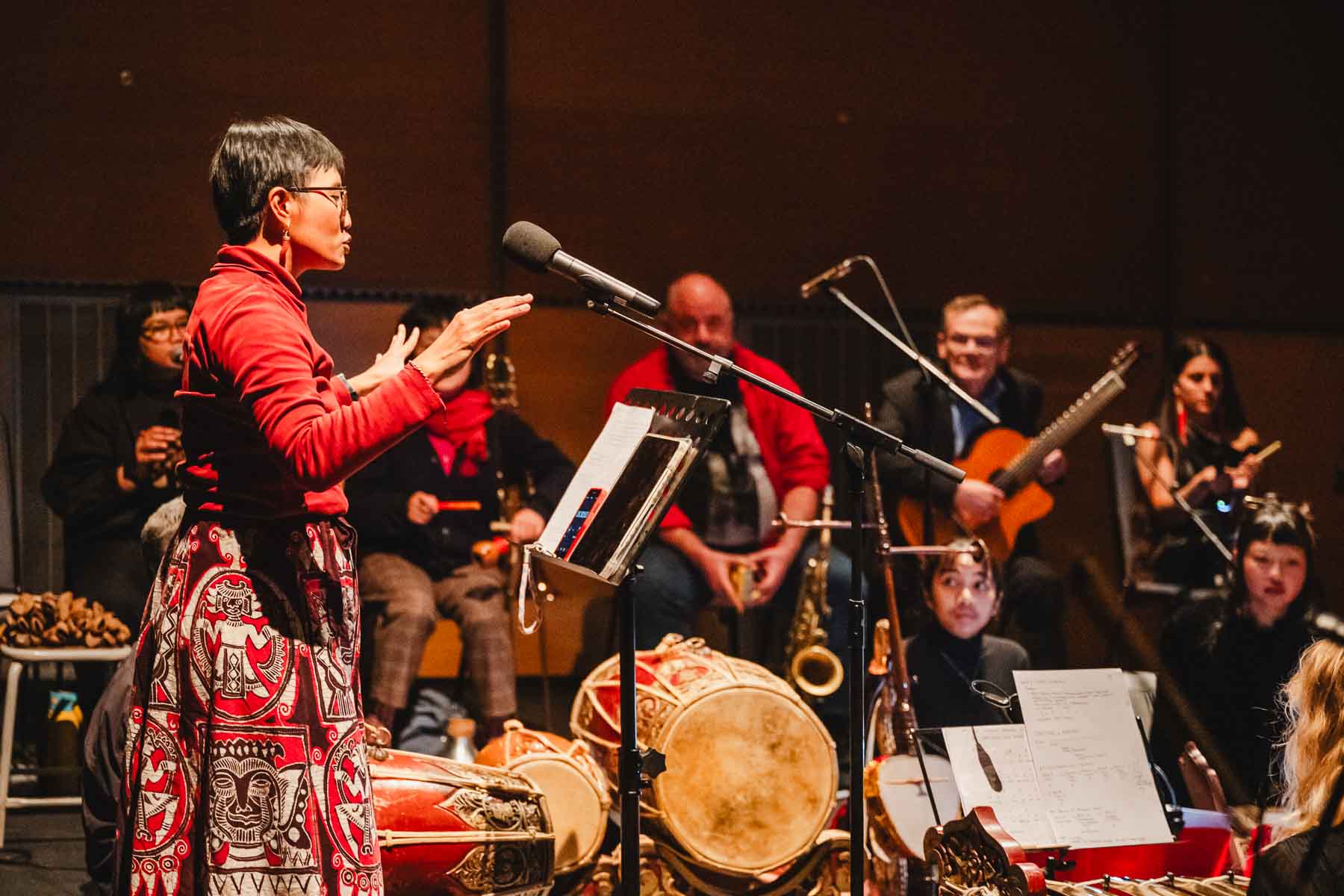
On Saturday afternoon I sat in on the panel discussion on music accessibility featuring Nikki Moran (Chair), Tia DeNora, Gema Swaratyagita, Gordon Dougall and Atzi Muramatsu
Who gets to be heard.
The discussion focused on the relationships between industry and contemporary music and inclusion as care in practice and inclusion through pedagogy.
Each speaker has a connection to the development of making improvisation music accessible – either through university positions, research, or community lead projects such as Atzi Muramatsu who is the current creative director of Sonic Bothy.
A question that arose during the discussion is the idea of hierarchical sound making and the question of ‘are younger musicians finding their spaces in community based / grass roots organisations rather than big name institutions’.
I was interested in both these topics as I found strong relations within the contemporary art space as well – relating very much to the discourse happening within music.
In regards to the idea of non-hierarchal making, a ‘dilemma’ that appears to come up (similar, for example to curation) is how does this format become productive when there is no one leading the piece. Muramatsu discusses for example with Sonic Bothy, there is a need for open dialogue, a clear communication to achieve this collaboration. There is also a slowness of making, co-creating being a place of slow care that means when the work comes from a nurtured place with many sounds and many voices.
This reminds us that making music should be a fun process – at the end of everything, music making should be fun. Co-creating often means there is a lot of trial and error and a lot of fusion between those creating. At a young age we are told to play music in strict formats – also encouraged to play set music, and often in front of the whole class and mistakes were embarrassing! (This was certainly my experience and I found this discussion extremely relatable. As someone who stopped playing an instrument, even though, in my student days, I was good enough to be in a classical orchestra as their trombonist; my fear of making mistakes and not being inline stonewalled me from continuing. Perhaps if improvisation as a format was encouraged more, students, like myself, would feel more inspired to continue playing). A fading joy for those discouraged to find the joy in playing music. The Glasgow Improvisers Orchestra reminds us to have fun with sound making; improvisation is just as much music as it is art.
Tia DeNora speaks on allowing children to play and experiment with instruments and music making as a part of their own development. Children learn to verbally communicate and express themselves through the noises in their voices; music facilitated in the same way can produce such interesting and experimental sounds even without the yet taught linear formulations of ‘good music’ or ‘the right way to make music’. The Glasgow Improvisers Orchestra, I see as embracing this joy and this expressed freedom of unbiased structures and allows the musicians to explore their artistry in a child-like curiosity. Even throughout the performances there was the irregular use of a sellotape and the rip sound it produced used as an instrument for sound making. Awesome.
There was a poignant question the panel raised which I thought you, the reader, would like to consider – what is the value of music and how is it valued?
This panel event was a great insight to the dialogue happening within the world of music and being able to sit in on the topics that circulate around music making. I found it not too dissimilar to contemporary art, and for this, I am excited to see and hear more.
_________
Thank you to the Glasgow Improvisers Orchestra for inviting us to experience the GIO Fest 2025.
Please see Glasgow Improvisers Orchestra for more details: https://www.glasgowimprovisersorchestra.com/
And Galemen Nagas Mas: https://www.nagamas.co.uk/
 Gal bag.