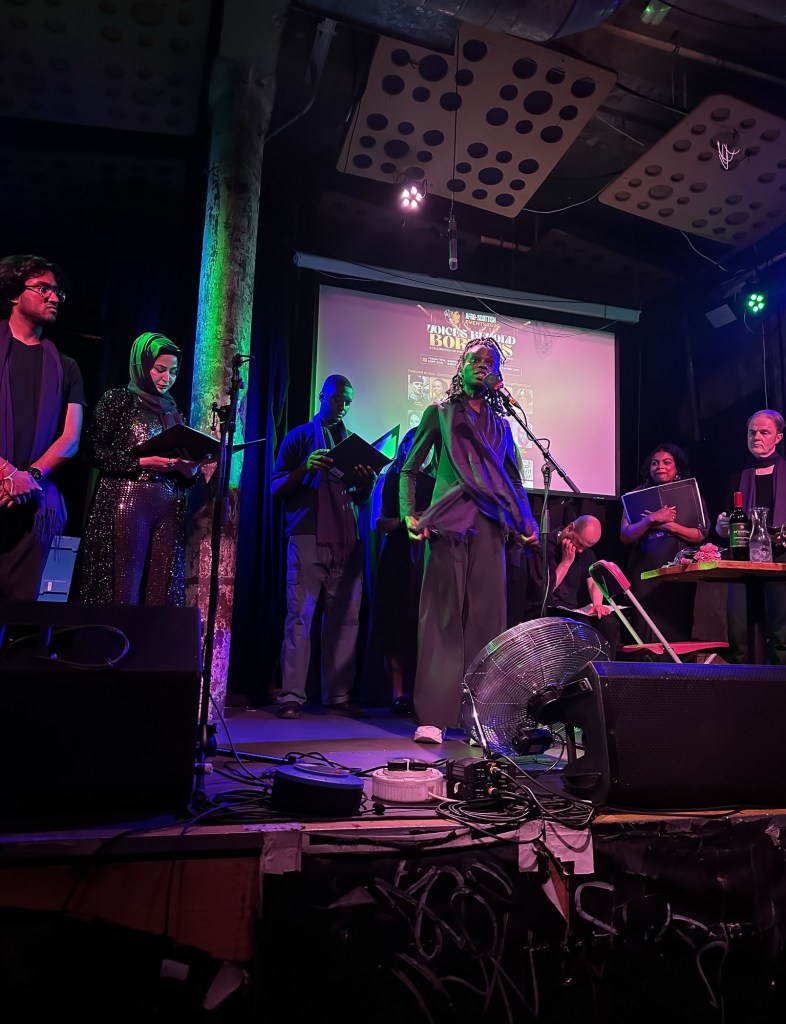
Before we wind down for the chilly season, we at GalBag were invited to review founder of Afro-Scottish, Chisom Okoronkwo, and her recent performance at the collective’s 2026 event themed and titled Voices Beyond Borders.
Chisom is a Nigerian writer and spoken-word artist based here in Scotland. For this particular show she made the decision to have two performers act as an extension of the poem she delivered, transforming it into a dramatised narrative of her personal account on Nigerian childhood and identity.
During this performance, it appeared that the stage was constrained as the movements of the dramatists around Chisom seemed tight. Imagining a scenario where there was more space on the stage would have possibly enabled a greater sense of freedom of movement, making room for a more effective embodiment of the poem through its visual feature.
That being said, throughout the poem an atmosphere of warmth was created as she spoke of hand-me-downs, eating uninvited at neighbours’ homes, and family interactions garnering cheers and laughs from the audience. Chisom brought a piece of herself to the evening which allowed for a moment of cultural solidarity with the viewers as they could reminisce, resonate, or feel a resemblance with each other’s childhoods.
The sense of community is ingrained in her work and evidently in her curation.
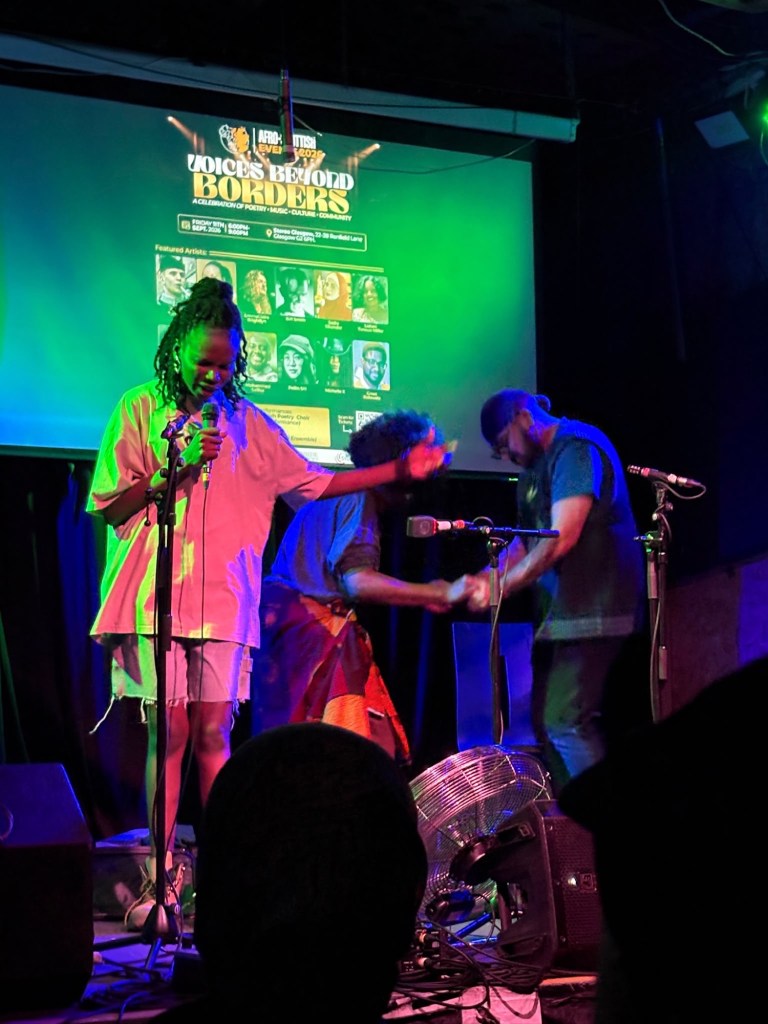
Turning to the event itself, what Chisom has developed through Afro-Scottish is a collective of artists and performers who showcase their own lived experiences within a cultural context. All creatives accentuate their world perspectives through multiple mediums, ranging from spoken word and sound to visuals and choreography.
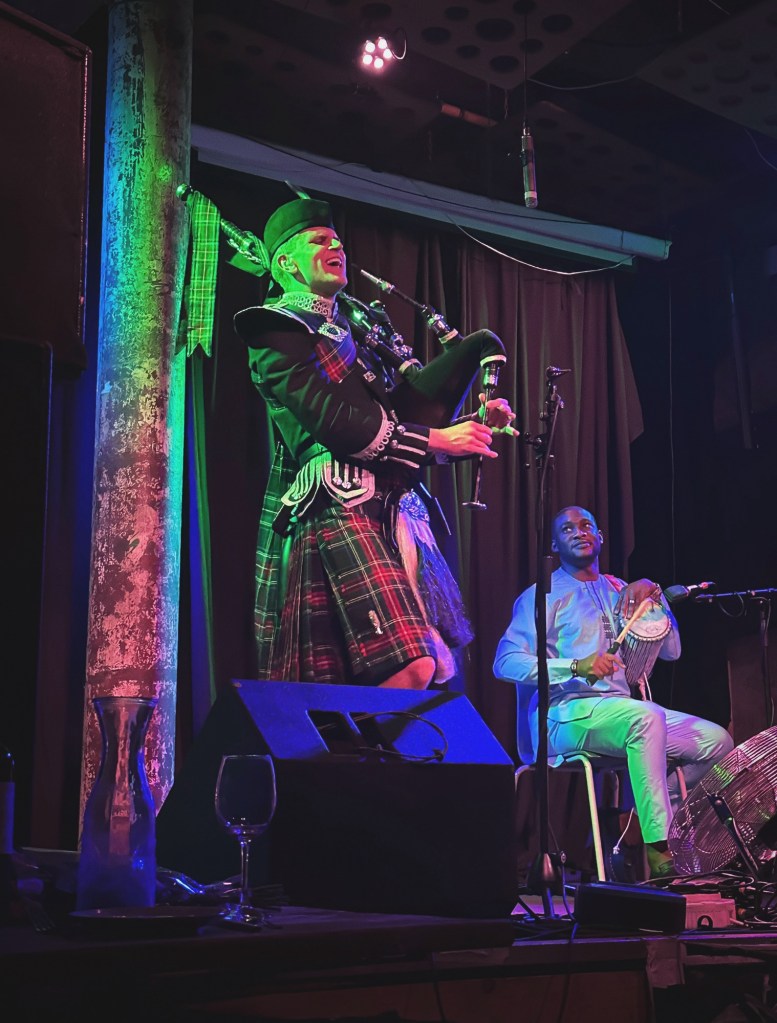
These Afro-Scottish events enable Chisom to channel, through her curation, her belief in the common connections between people. Even when people don’t speak the same language, their love of shared food, music, and dance can be understood by all. Through this blended experience, the events create a stage in which multi-cultural exchanges are celebrated. To demonstrate this, Voices Beyond Borders showcased the collaboration of two culturally significant instruments: the unyielding sounds of the bagpipes, ensembled with the fluid, composed beats of the dùndún drum.
While communicating, Chisom revealed to us her inquiry into what conditions are necessary for cultural encounters to become artistically meaningful and, by extension, what role does a curator/artist play in creating those conditions.
In the traditional format of performance-based events, there is often a formality in the type of curation: an audience, a stage, and performer(s). Each exists to be viewed from a distance. Through further curatorial development, there may be an opportunity to shift this dynamic. If done so successfully, this could release the tension between performer and audience, enabling a more intimate setting that would seek to achieve the ‘meaningful’ conditions mentioned. Perhaps then Chisom could go on to create a unique and enriched place of cultural exchange in a future edition of Voices Beyond Borders or further Afro-Scottish events.
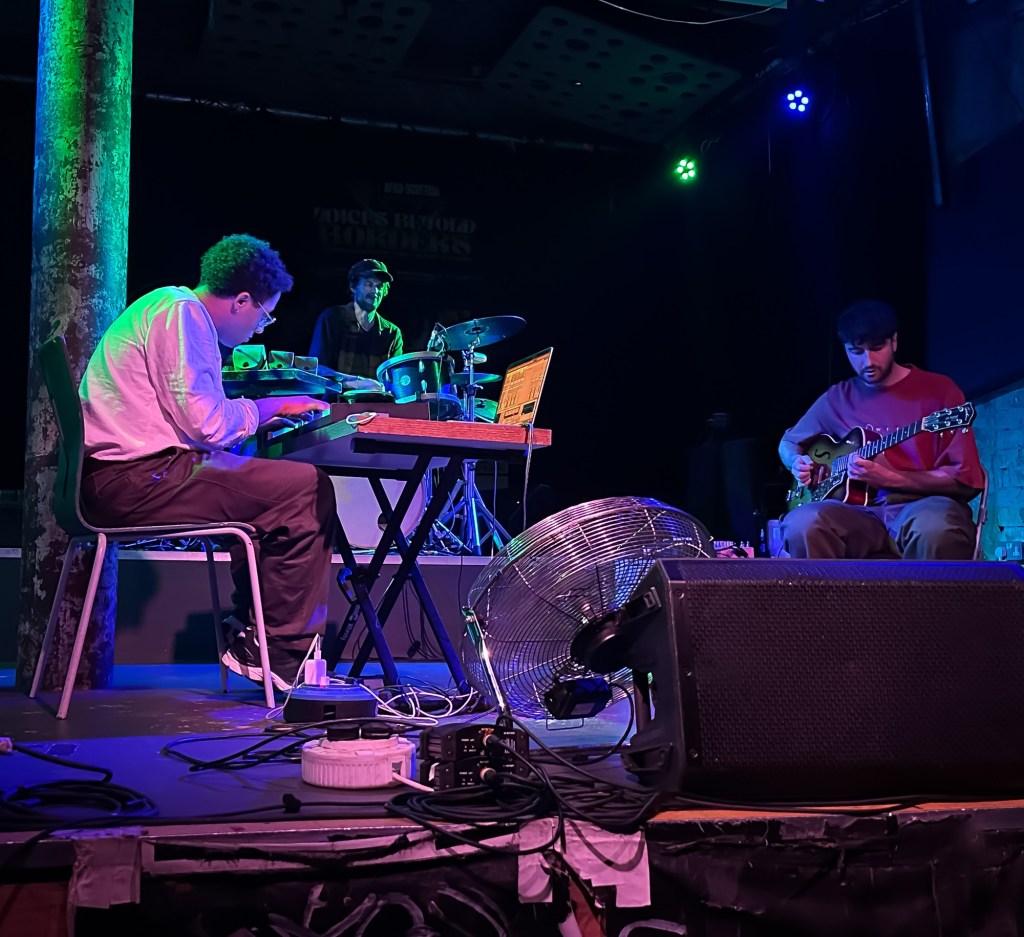
We feel that even the act of offering an invitation — to be present, to enter, and join in such cultural exchange — Afro-Scottish already demonstrates the role the curator/artist plays in our community’s resistance and power. This platform fosters a space in which sharing cultural, linguistic, and, of course, geographical experiences extends beyond borders.
A big thank you to Chisom for inviting us to write about her incredible work in both her practice and community organisation.
All photos used are credited to Ross Wilcock.

